Sugarcane bagasse plate making machine demand is surging — and the timing couldn't be better to invest. India's Single Use Plastic Ban has created genuine urgency — opening a massive molded fiber opportunity, and the global biodegradable tableware making machine market is expanding at 4.6% CAGR through 2031. Whether you're searching for a bagasse paper plate making machine or a full-scale sugarcane pulp plate making machine, the market fundamentals are strong.
Parason — with 50+ years in pulp and paper engineering — designs and builds complete bagasse plate making machine production lines, from 3 TPD starter setups to 100+ TPD industrial-scale plants. As a bagasse plate manufacturing machine supplier, we cover every stage — from raw material handling to finished product stacking. Below is a practical walkthrough of the sugarcane plates manufacturing process — raw materials, manufacturing stages, equipment specs, and the factors that drive your investment.
What Is Sugarcane Bagasse? Biodegradable Plates Raw Material for Your Plate Making Machine
After sugarcane stalks go through the crusher to extract juice, what remains is a dry, fibrous material — bagasse. India processes over 350 million tonnes of sugarcane each year, producing roughly 100 million tonnes of this byproduct. Most of it ends up as boiler fuel or gets discarded. That's an enormous opportunity for bagasse plates raw material sourcing.
Why Bagasse Works So Well for Plate Manufacturing
What makes bagasse particularly suited as a biodegradable plates raw material isn't just its availability. It's the fiber composition:
| Property | Value |
|---|---|
| Cellulose content | 45–55% |
| Hemicellulose | 20–25% |
| Lignin | 18–24% |
| Fiber length | 1.0–1.7 mm |
| Moisture (fresh) | 45–55% |
That cellulose percentage — nearly half the material — is what gives bagasse plates their structural rigidity. The fiber length sits in a sweet spot for bonding during the molding stage. And unlike wood pulp, you're working with an agricultural byproduct that sugar mills are often happy to sell at low cost. For anyone planning to invest in a bagasse plate machine or a larger bagasse pulp plate making machine line, it's hard to find a better starting material.
Bagasse Plates Raw Material: What You'll Actually Need to Source
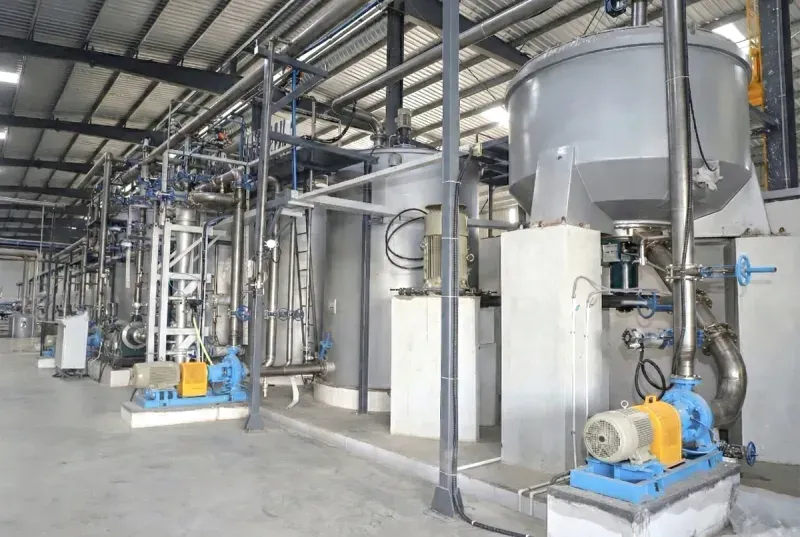
Your primary input for the sugarcane plates manufacturing process is sugarcane bagasse — but most manufacturers don't feed loose bagasse directly into their lines. Instead, they work with molded fiber pulp sheets.
Sugarcane Bagasse Pulp Sheets — Primary Raw Material
Why pulp sheets over raw bagasse? It comes down to practicality. Raw bagasse arrives with inconsistent moisture levels and varying fiber quality. Pulp sheets — produced by running bagasse through stock preparation systems and pressing flat — give you uniform fiber quality, lower moisture, compact storage, and months of shelf life.
One question we hear often from first-time manufacturers: "Can I skip pulp sheets and pulp raw bagasse on-site?" You can, especially near a sugar mill — but you'll need a dedicated pulping line and will manage more variables in fiber consistency.
Full Input List for the Bagasse Plates Manufacturing Process
| Material | Purpose | Notes |
|---|---|---|
| Sugarcane bagasse pulp sheets | Primary fiber source | Most commonly used; consistent quality |
| Loose sugarcane bagasse | Alternative fiber source | Requires on-site pulping; cheaper near sugar mills |
| Water | Pulp dilution & forming | Clean water; recycled in closed-loop systems |
| Oil-resistant additives | Grease resistance | Food-grade chemicals for oil-proof properties |
| Water-resistant agents | Moisture barrier | Applied during pulping or post-forming |
| Wheat straw / bamboo | Alternative fibers | Can be blended or used independently |
Parason's molded fiber lines — whether you're running a sugarcane plates machine or a bagasse pulp molding machine — handle multiple biodegradable plates raw material types including bagasse, wheat straw, bamboo, hardwood, and softwood, giving you flexibility when commodity prices shift. For a complete overview of all forming machine types and capacity ranges, see our guide to paper pulp molding machines and complete systems.
Sugarcane Plates Manufacturing Process: Step-by-Step Guide for Your Bagasse Plate Making Machine
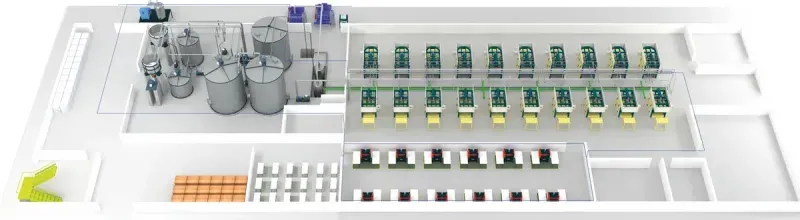
The sugarcane plates manufacturing process runs through seven stages. Each one directly affects the finished product's strength, surface quality, and food-safety compliance.
Bagasse Raw Material Preparation & Cleaning
Raw bagasse or pulp sheets are sorted and cleaned to strip out contaminants — stones, metal debris, plastic fragments, excess pith. Working with loose bagasse from a sugar mill? You'll run it through a dry depithing system first to separate dust from usable fiber.
Pulping — Converting Bagasse into Fiber Slurry
Cleaned bagasse raw material goes into a pulper, where water breaks it down into individual fibers. The target is a slurry at 0.3–0.5% consistency — thin enough for uniform mold distribution, thick enough to form a solid plate. Too thick and you get uneven forming; too thin and cycle times stretch out. Parason's molded fiber production systems are calibrated for this range, with both high-consistency and low-consistency configurations available.
Chemical Treatment for Oil & Water Resistance
Food-grade oil-resistant and water-resistant chemicals are mixed into the pulp at controlled dosing levels. Without this step, your finished eco friendly disposable plates would soak through the moment someone puts butter chicken on them. Thorough mixing is essential — uneven distribution means inconsistent plate performance.
Vacuum Forming — Shaping Plates in the Bagasse Plate Making Machine
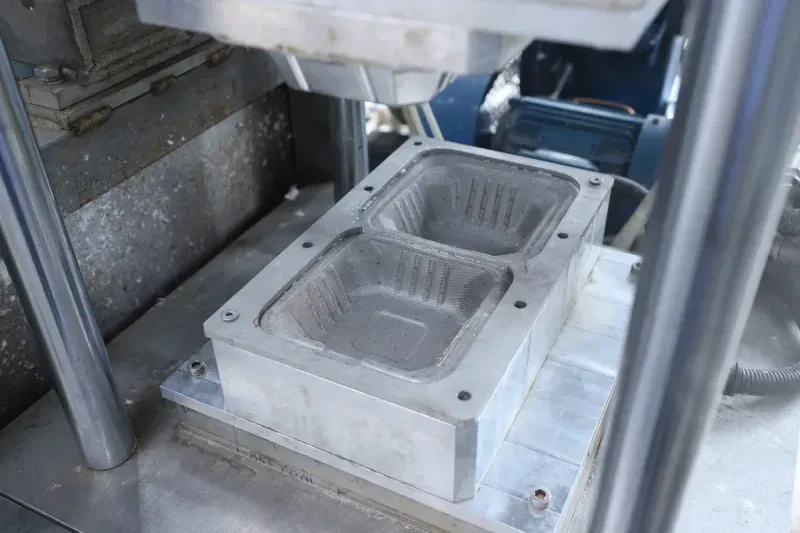
The treated slurry flows into the forming machine. Vacuum suction pulls fiber onto precision molds, building up the plate shape layer by layer. The mold geometry determines the final product — round plate, compartmentalized tray, bowl, or clamshell. Parason's PFA Series automatic forming machine — a fully automated sugarcane pulp plate making machine — handles this stage, producing 350–850 kg/day depending on the model.
Hot Pressing & Thermoforming for Smooth Finish
Freshly formed plates carry significant moisture and rough texture. Hot pressing solves both — controlled heat and pressure drive out water, compress fibers, and create a smooth surface finish. For premium tableware, Parason uses multi-stage heated pressing to achieve thermoformed molded fiber quality. The difference is immediately noticeable when you pick up the plate.
Edge Trimming for Dimensional Accuracy
Formed plates come out with excess edge material that needs trimming. The edge trimming machine cuts to exact dimensions so every plate in a stack is identical. Parason offers hydraulic and hydro-pneumatic configurations based on throughput and product complexity.
Quality Inspection & Packaging
Final checks cover dimensional accuracy, surface quality, structural strength, and food-safety standards. Approved products are counted, stacked, and packed for shipment.
Sugarcane Bagasse Plate Making Machine: Equipment & Specifications
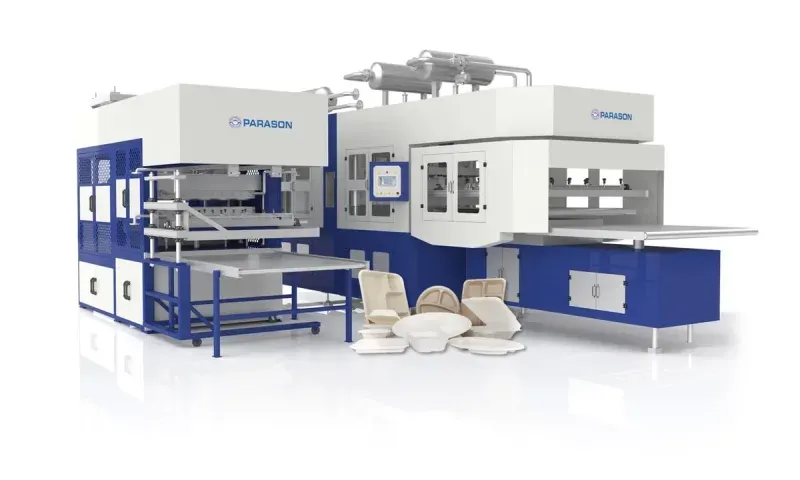
A production-ready sugarcane waste plate making machine line has three subsystems — stock preparation, forming, and finishing. Parason supplies all three as a single-source turnkey solution.
Stock Preparation System for Bagasse Processing
The stock prep line transforms your bagasse raw material or pulp sheets into forming-ready slurry. Core equipment includes:
- LC Pulper — Disintegrates raw material into fiber suspension using offset slushing for uniform pulping
- Conical Refiner (CR) — Develops fiber bonding at low energy consumption without cutting fiber length
- Conical Deflaker (CD) — Breaks remaining fiber flakes for smoother pulp quality
- Low-Consistency Cleaner — Removes dirt, shives, and specks for optically clean tableware
- Magstruct™ Magnetic Separator — Traps metallic contaminants with zero energy consumption
- Vertical Agitator (PVAT) — Maintains uniform stock consistency in storage tanks
- Chemical dosing system — Meters oil/water-resistant additives into the process
Parason Automatic Forming Machine (PFA Series) — Primary Tableware Forming Equipment
The PFA Series is what most customers run as their primary bagasse tableware making machine — vacuum forming combined with hot pressing to produce eco friendly disposable plates with thermoformed quality on both sides. It's also the most popular sugarcane bagasse tableware making machine in our range for export-quality tableware production.
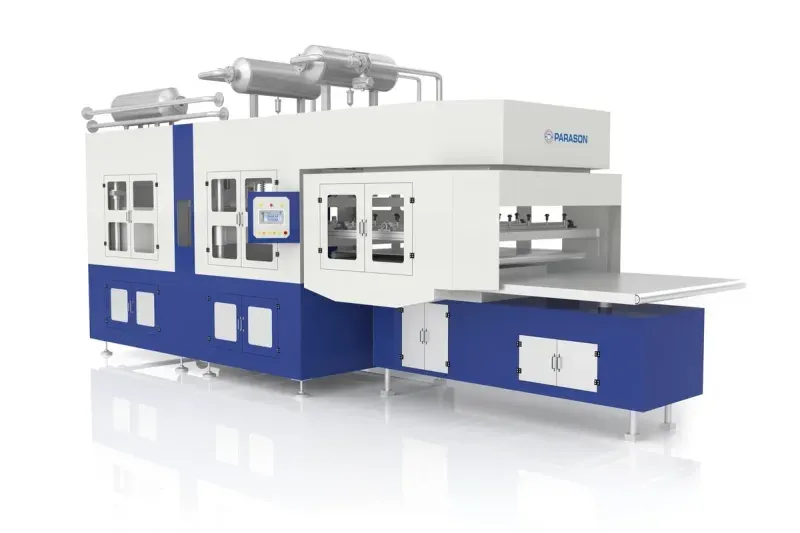
PFA-S1500 — Parason's Highest-Output Automatic Forming Machine
The PFA-S1500 is built for manufacturers who need maximum daily output from a single station. Its 1500 × 1500 mm platen — the widest in the PFA range — delivers 700–850 kg/day with integrated vacuum forming, hot pressing, and automated stacking.
| Specification | PFA-S1500 |
|---|---|
| Platen Size | 1500 × 1500 mm |
| Output | 700–850 kg/day |
| Forming Method | Vacuum suction + hot press (1 station) |
| Product Height | Up to 70 mm |
| Mold Heating | Electric or Thermal oil |
| Control System | PLC with HMI |
| Surface Finish | Smooth both sides (thermoformed) |
| Automation | Fully automatic with stacker & conveyor |
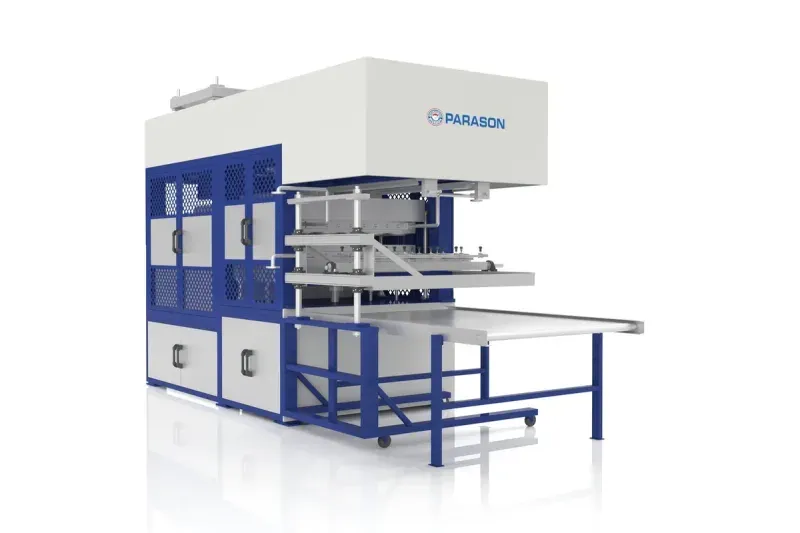
PFA-S1300 — Mid-Range Automatic Forming Machine
The PFA-S1300 suits manufacturers who need solid throughput without the S1500's footprint. Its 1300 × 750 mm platen delivers 350–500 kg/day, making it a solid mid-range bagasse plates manufacturing machine for medium-scale operations.
| Specification | PFA-S1300 |
|---|---|
| Platen Size | 1300 × 750 mm |
| Output | 350–500 kg/day |
| Forming Method | Vacuum suction + hot press (1 station) |
| Product Height | Up to 70 mm |
| Mold Heating | Electric or Thermal oil |
| Control System | PLC with HMI |
| Surface Finish | Smooth both sides (thermoformed) |
| Automation | Fully automatic with in-line transfer |
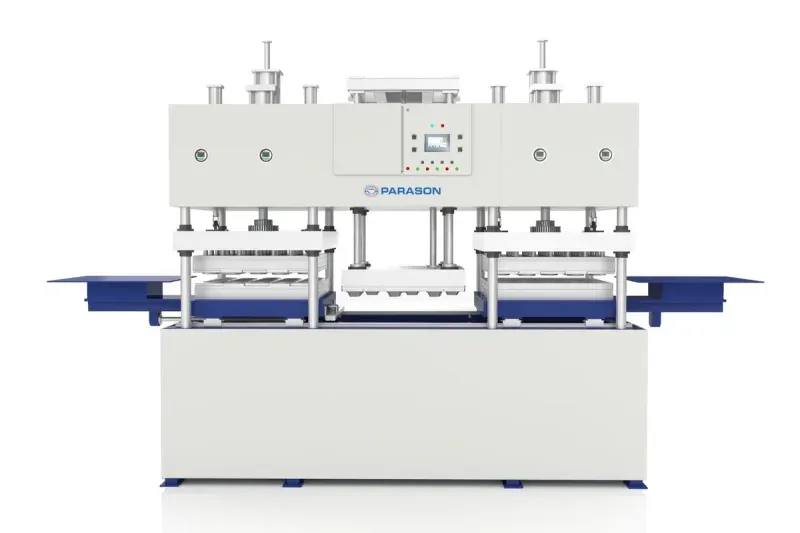
PFA-D1000 — Dual Hot Press Forming Machine
The PFA-D1000's twin-press architecture is its defining advantage. Two sequential hot press stations within a 1000 × 950 mm platen produce noticeably denser, smoother products at 350–500 kg/day — the right pick for premium food service or export-grade tableware.
| Specification | PFA-D1000 |
|---|---|
| Platen Size | 1000 × 950 mm |
| Output | 350–500 kg/day |
| Forming Method | Vacuum suction + dual hot press (2 stations) |
| Product Height | Up to 70 mm |
| Mold Heating | Electric or Thermal oil |
| Control System | PLC with HMI |
| Surface Finish | Premium smooth (dual pressing) |
| Automation | Fully automatic with servo-controlled transfer |
Complete PFA Series Comparison
| Model | Platen Size (mm) | Output (kg/day) | Key Feature |
|---|---|---|---|
| PFA-S1500 | 1500 × 1500 | 700–850 | Highest output |
| PFA-S1300 | 1300 × 750 | 350–500 | Balanced capacity |
| PFA-D1000 | 1000 × 950 | 350–500 | Dual hot press for premium finish |
Other Forming Machine Options for Large-Scale Bagasse Tableware Production
For production targets beyond the PFA Series, Parason offers higher-speed forming systems:
Automatic Rotary Forming Machine (PRF Series)
| Model | Mold Platen Size | Capacity (pcs/hr) |
|---|---|---|
| PRF-1 | 8 × 6 | 8,000 |
| PRF-2 | 8 × 6 | 6,000 |
| PRF-3 | 8 × 5 | 5,000 |
| PRF-4 | 8 × 4 | 4,000 |
| PRF-5 | 8 × 3 | 3,000 |
View all bagasse tableware machine options and sugarcane bagasse plates machine configurations from Parason.
Robotic & Semi-Automatic Forming Machines
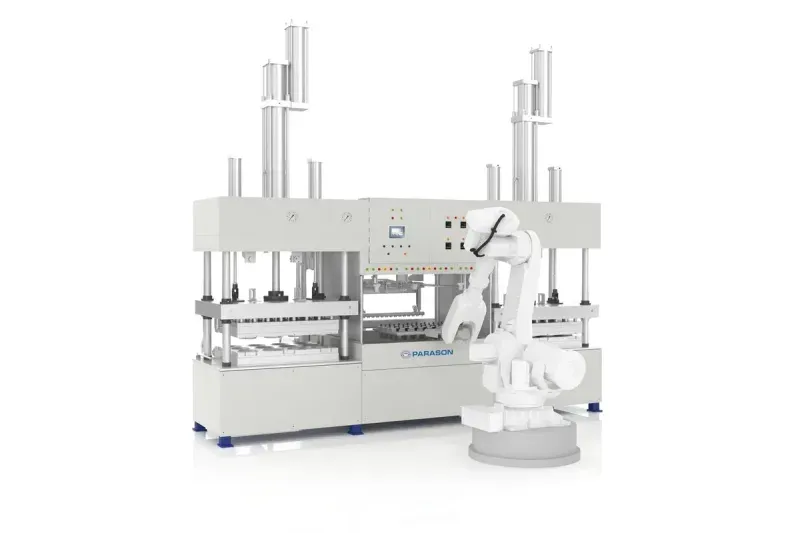
- Robotic Forming Machine — Multi-axis robotic arm automates the full cycle: forming, pressing, transfer, and stacking. Built for operations where labor costs justify full automation.
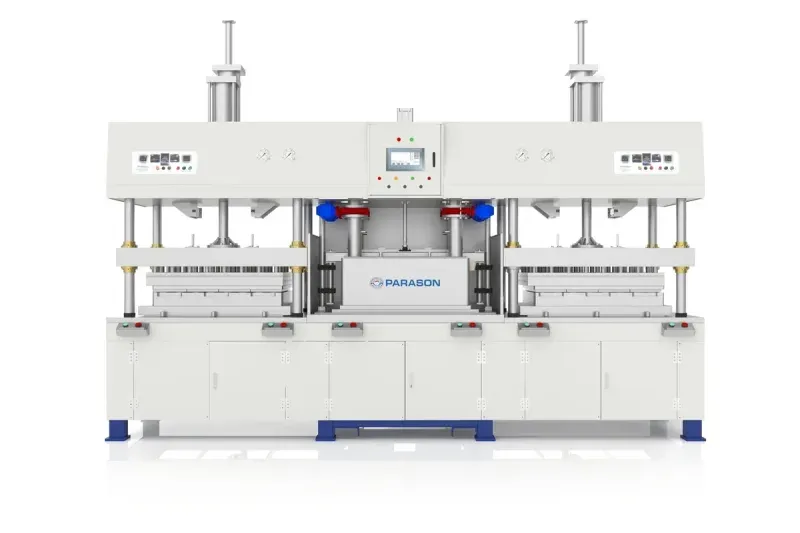
- Semi-Automatic Forming Machine — 500 kg/day capacity. A practical sugarcane plate machine for entrepreneurs testing the bagasse tableware market. Read more about semi-automatic molded fiber production lines.
Edge Trimming Machine for Bagasse Plates
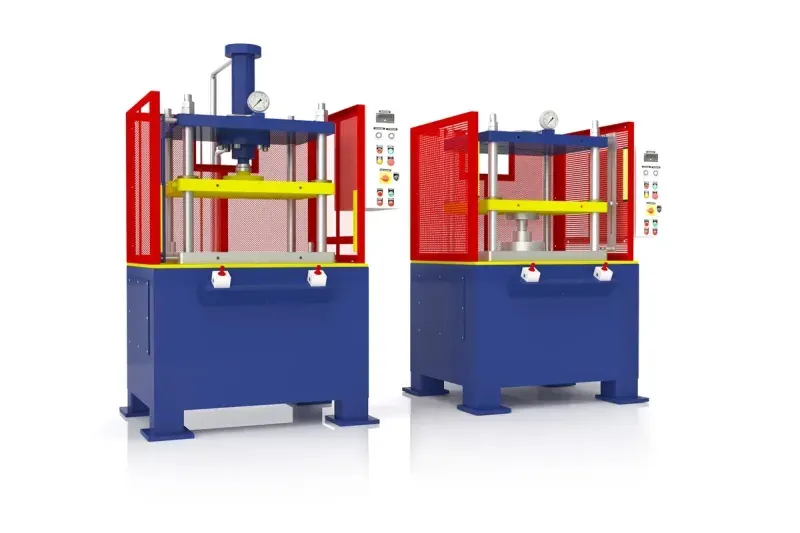
Parason's edge trimming machines come in hydraulic and hydro-pneumatic variants, engineered for repeatable cuts that keep every product within tight dimensional tolerances.
Custom Mold Manufacturing for Bagasse Tableware
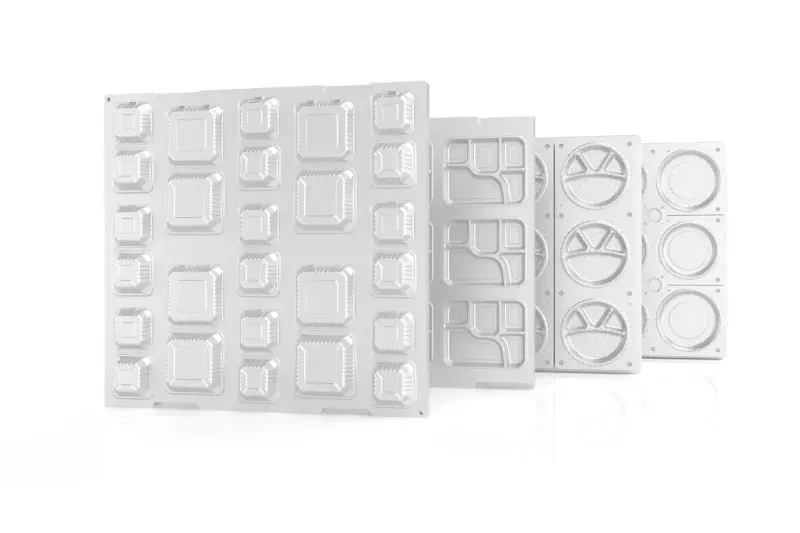
The mold defines your product's shape, depth, wall thickness, and surface texture. Parason machines all production molds in-house with 25+ VMC (Vertical Machining Centre) stations, using proprietary anti-leak technology for consistent forming across tens of thousands of cycles.
| Category | Products |
|---|---|
| Tableware | Plates, bowls, clamshells, meal trays, containers (27+ standard designs) |
| Industrial Packaging | Electronics packaging, fan carriers, laptop carriers |
| Medical | Kit trays, vial trays, kidney trays |
| Cosmetics | Compact trays, palette carriers, perfume trays |
How to Choose the Right Sugarcane Plate Making Machine
This decision comes down to where you are today, where you want to be in 3 years, and how much labor you can manage.
| Factor | Semi-Automatic | PFA Series (Auto) | Rotary PRF Series | Robotic |
|---|---|---|---|---|
| Output | 500 kg/day | 350–850 kg/day | 3,000–8,000 pcs/hr | High volume |
| Automation | Manual loading | Fully automatic | Fully automatic | 6-axis robotic |
| Labor needed | 3–4 operators | 1–2 operators | 1 operator | Minimal |
| Surface finish | Single side smooth | Both sides smooth | Both sides smooth | Premium finish |
| Best for | Startups, testing | Medium production | Large-scale operations | Premium products |
In our experience across India, Africa, and Southeast Asia, the PFA Series is where most new entrants find the best return — export-quality eco friendly disposable plates at a scale that justifies the investment, with the option to add forming stations as demand grows. For manufacturers looking at a sugarcane disposable plates machine, the PFA delivers the right balance of automation and output.
Factors Affecting Bagasse Plate Making Machine Price & Manufacturing Plant Cost
The sugarcane bagasse plates making machine plant cost depends on several project-specific variables. Whether you're budgeting for a small startup or a large-scale bagasse plates manufacturing plant, these are the factors that move the needle most:
The bagasse plate making machine price depends primarily on the level of automation you choose. The sugarcane pulp plate making machine cost varies widely — a semi-automatic sugarcane plate making machine costs a fraction of a PFA Series or robotic line — but the labor savings on automatic systems compound quickly.
Production capacity scales the equipment list. A 500 kg/day operation is a fundamentally different investment than a 100+ TPD turnkey plant with multiple forming stations.
Mold complexity varies more than most expect. Standard plate molds and multi-cavity clamshell molds are very different price points.
Other factors include the number of forming machines, whether you need on-site pulping equipment, and whether you want turnkey project delivery or equipment-only supply. The sugarcane bagasse plates making machine plant price in India also varies based on installation scope — civil work, electrical, and commissioning add to the total project cost versus equipment-only supply.
Parason builds complete bagasse plate manufacturing plant solutions from 3 TPD startup lines to 100+ TPD industrial-scale operations.
Bagasse Plates vs Other Eco-Friendly Disposable Plate Materials
| Property | Sugarcane Bagasse | Areca Leaf | Paper / Cardboard | Plastic |
|---|---|---|---|---|
| Biodegradable | Yes (60–90 days)* | Yes (60 days) | Yes (2–6 months) | No (500+ years) |
| Compostable | Yes (ASTM D6400) | Yes | Partially | No |
| Heat resistant | Yes (up to +180°C) | Yes | Limited | Some types |
| Oil resistant | Yes (with coating) | Natural | Needs coating | Yes |
| Water resistant | Yes (with coating) | Moderate | Poor | Yes |
| Recyclable | Yes (in paper mills) | No | Yes | Limited |
| Raw material cost | Low (agri waste) | Seasonal, limited | Medium | Petroleum-based |
| Scalability | High (3–100+ TPD) | Low (manual) | High | High |
*Composting timeline based on industrial composting conditions per ASTM D6400 standards.
Areca leaf has a niche, but seasonal supply caps scalability. Paper struggles with moisture. And plastic regulations are tightening everywhere. Bagasse combines low-cost raw material, proven manufacturing scalability, and genuine sustainability — which is why it dominates the disposable tableware market globally and why more manufacturers are investing in bagasse plate making machines every year.
Key Benefits of Eco Friendly Disposable Plates from Sugarcane Bagasse
Beyond the sustainability angle, products from a bagasse plate making machine perform exceptionally well in real food service conditions. Here's what makes disposable tableware from sugarcane bagasse stand out:
Why Choose Parason as Your Bagasse Plate Making Machine Manufacturer in India
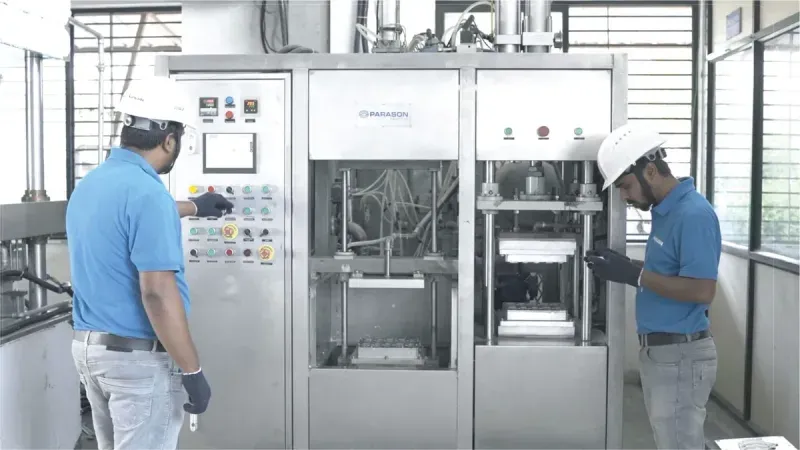
When you buy a bagasse plate making machine from Parason, you're buying directly from the manufacturer — not a trader or reseller. Every forming machine, trimming station, and sugarcane plate making machine mold is designed and built in our own facilities across India. That distinction matters when you need spare parts in 3 years or want to expand your disposable tableware production line.
- 50+ years of engineering depth — Founded in 1976, with five decades of pulp and paper machinery expertise
- 2,000+ installations across 75+ countries — Running production lines, not brochure numbers. Learn more
- Single-source turnkey delivery — Feasibility, layout, equipment, installation, commissioning, training — one point of accountability
- In-house mold production — 25+ VMC machines with proprietary anti-leak mold technology
- Rapid prototyping — 3D printing to pilot-scale mold testing before committing to production tooling
- Multi-fiber flexibility — Sugarcane bagasse, wheat straw, bamboo, hardwood, or softwood on the same line
- ISO 9001:2015 certified — Quality-controlled manufacturing across 10+ facilities
- Dedicated pilot lab — Real-condition mold tests and product trials before full-scale commitment
- ABB partnership — Industry 4.0-ready automation and control systems
- Installed references — Satia Industries (7 TPD), Skyang Products (8 TPD), Kibos Sugar & Allied, Kenya (6 TPD)