Walk through any recycled paper mill and you will find the trommel screen machine sitting right after the pulper — quietly doing one of the most important jobs in the entire stock preparation line. It recovers fiber that would otherwise be lost with the rejects, and it removes contaminants that would damage every machine downstream. In a pulping loop processing old corrugated containers or mixed waste paper, the trommel machine is not optional equipment — it is a requirement.
Yet in our experience across 2,000+ installations in 75+ countries, the trommel screen is one of the most underestimated machines in the mill. Operators tend to focus on the pulper, the screens, the refiners — but a poorly performing trommel means fiber loss that directly hits your bottom line. In a 100 TPD recycled mill, even 2% extra fiber loss at the trommel translates to 2 tonnes of good fiber thrown away every single day.
This guide covers how the trommel screen machine works, its construction, advantages in paper making, and what capacity range you need based on your mill’s production target.
What Is a Trommel Screen Machine?
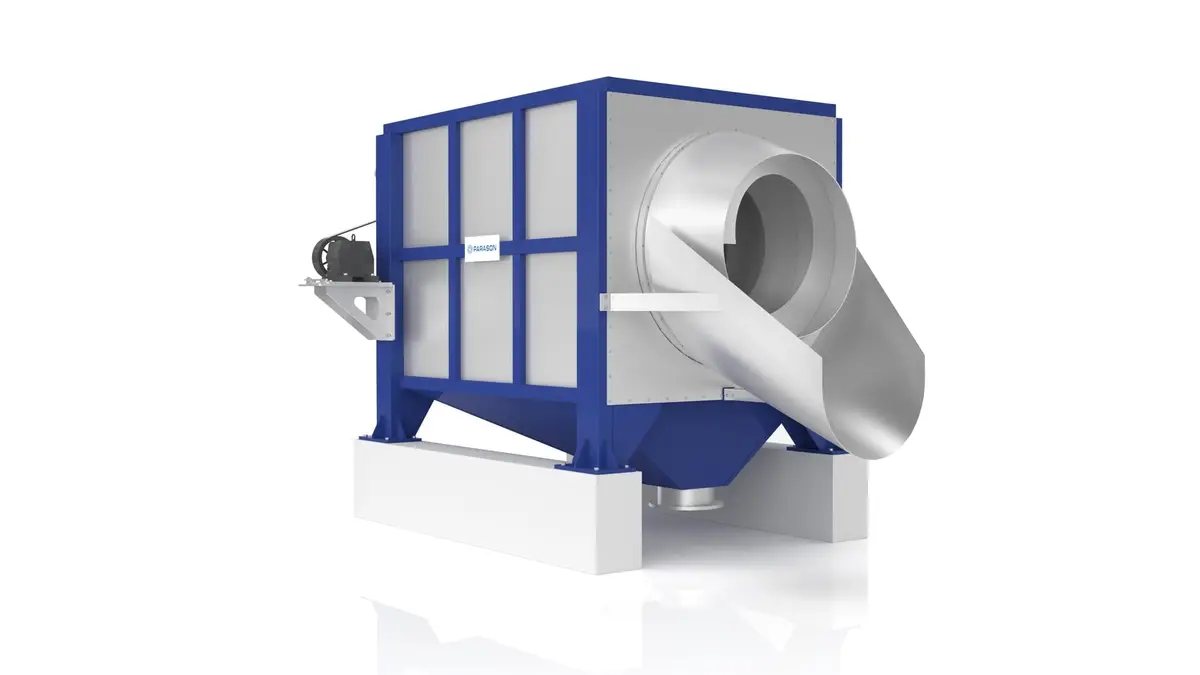
A trommel screen machine — also called a trommel machine, rotary screen, or drum screen — is a cylindrical screening device that separates materials by size. In the pulp and paper industry, the trommel screen machine sits after the pulper to separate fiber from rejects like plastic film, wire, tape, and other non-fiber contaminants.
The principle is simple: rejected material from the pulper’s secondary screen enters the rotating drum. As the drum turns, water sprays wash out any good fiber still clinging to the rejects. That recovered fiber passes through the screen perforations and returns to the pulping system. The remaining reject — plastics, wires, rags — travels along the drum and exits at the reject end.
In a recycled paper mill, the trommel screen machine can recover up to 10% of fiber from the reject stream of a secondary screen in the pulping loop. That is fiber you would otherwise throw away.
How Does a Trommel Machine Work? — Working Principle
Understanding the trommel machine working principle is straightforward, which is one reason this equipment is so reliable in continuous mill operation. Here is the step-by-step process of trommel machine working:
Step 1: Reject Feed
Light reject material from the pulper’s secondary screen — containing a mix of fiber, small plastics, film, and other contaminants larger than 8 to10 mm — is fed into the trommel screen drum at the inlet end.
Step 2: Drum Rotation and Water Washing
The drum rotates slowly and continuously. Inside the drum, high-pressure water showers spray the reject material as it tumbles. This cataract motion — material lifting and falling as the drum turns — combined with the water spray, washes fiber free from the contaminant mass. Any mill operator who has watched a trommel in action knows this tumbling action is what makes the difference between good fiber recovery and poor.
Step 3: Fiber Recovery Through Perforations
The drum wall has perforated holes of customised sizes. Clean fiber, now separated from contaminants by the washing action, passes through these perforations along with water. This fiber-rich water is collected and returned to the pulper chest for further processing — recovering valuable fiber that would otherwise be lost.
Step 4: Reject Discharge
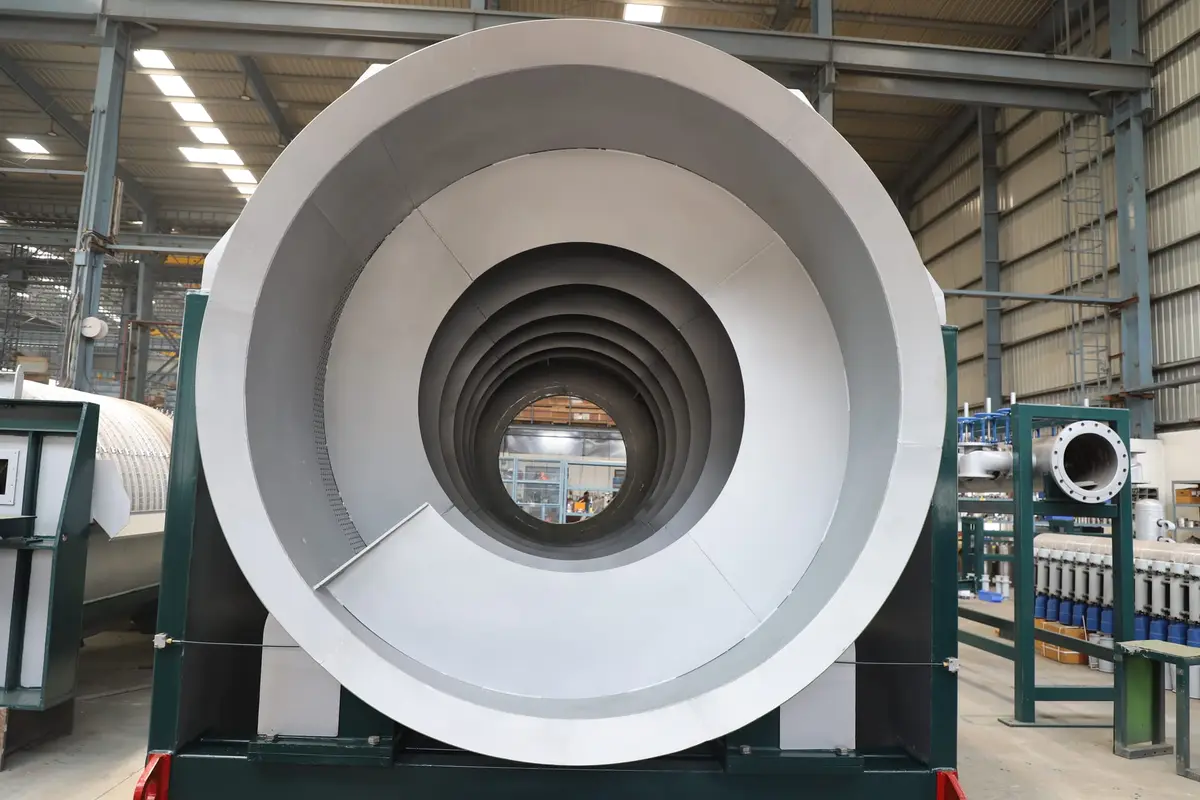
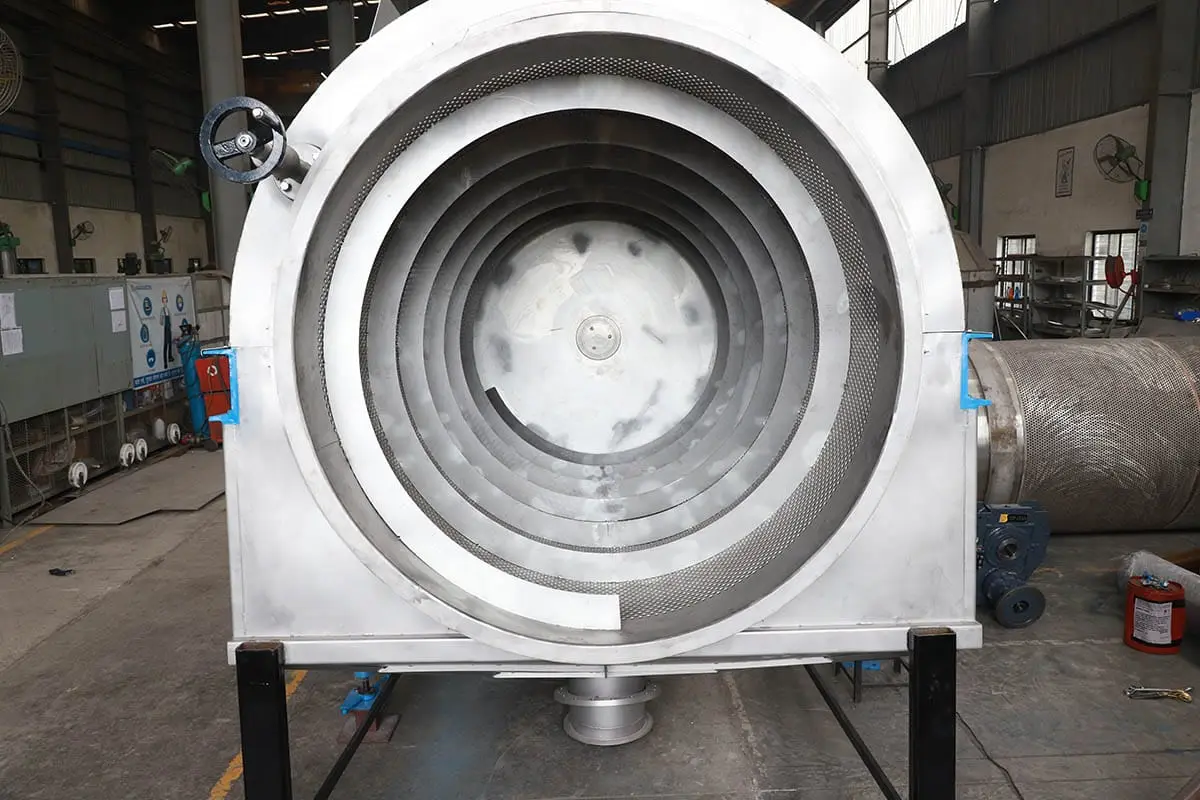
A helical screw welded to the inner diameter of the perforated drum moves the remaining reject material forward as the drum rotates. By the time it reaches the reject end, the material is almost entirely non-fiber — plastics, wire, film, tape — and is discharged as final reject from the pulping process. This reject typically goes to a reject compacter for volume reduction before disposal.
Construction of a Trommel Screen Machine
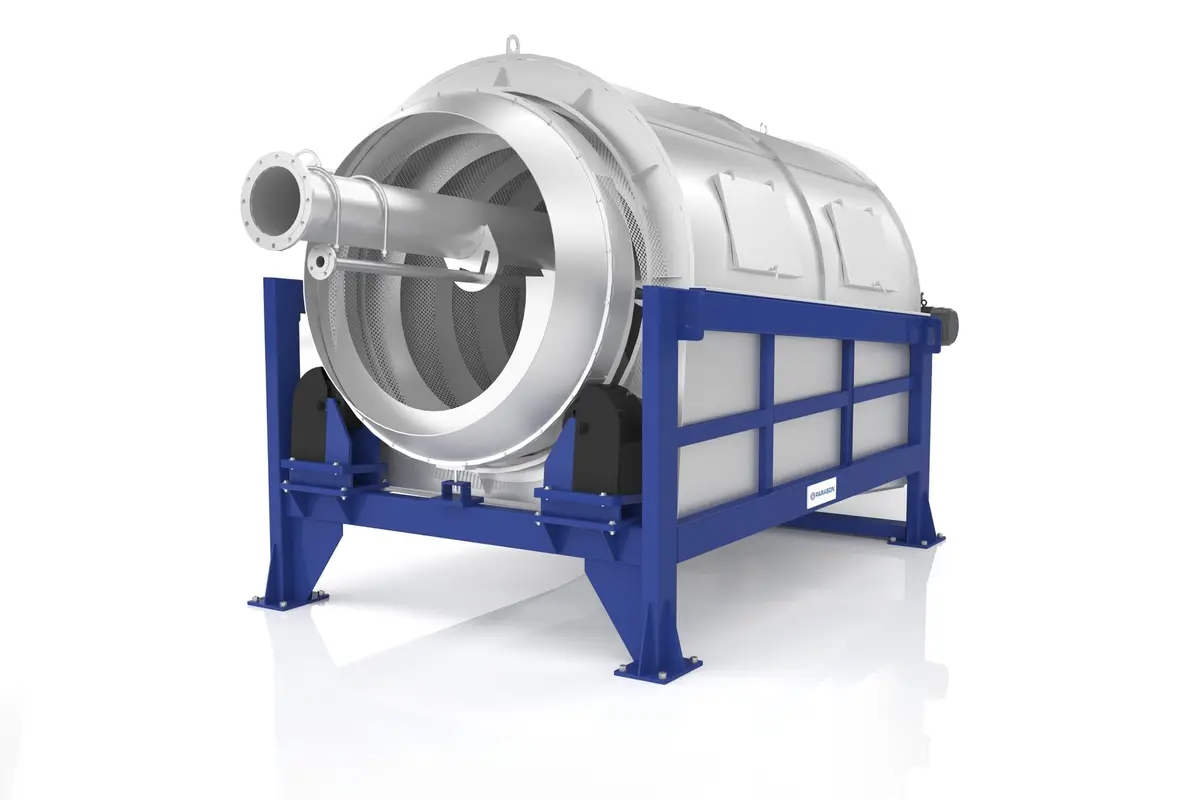
A well-built trommel machine has a simple design with few moving parts — which is exactly why it is low-maintenance and reliable in 24/7 mill operation. The main components are:
Drum
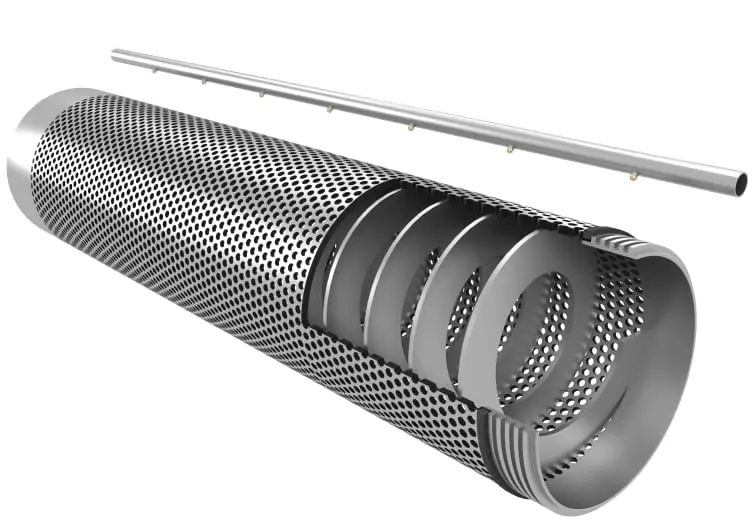
The cylindrical drum is the heart of the trommel screen machine. It is made of stainless steel (SS-304 in Parason’s TSR series) and rotates on its axis either horizontally or at a slight incline. The drum diameter and length determine the machine’s capacity and retention time.
Perforated Screen with Helical Screw
The drum surface has perforations — holes or slots of specific sizes designed for the application. A helical screw welded to the inner wall of the drum moves material from the feed end to the reject end. The perforation size and pattern are engineered for the specific furnish — OCC rejects need different screen geometry than mixed waste paper rejects.
Frame and Support Structure
A rigid steel frame supports the drum assembly, motor, and associated piping. The frame must be designed to handle continuous vibration and the weight of wet reject material inside the drum.
Support Rollers
A set of support rollers (trunnion rollers) carries the drum and allows it to rotate smoothly. Proper roller alignment is critical for even drum rotation and long bearing life — misaligned rollers cause uneven wear and premature failure.
Drive System
A geared motor with belt and pulley system provides the rotational motion. The rotation speed is controlled to match the reject volume — too fast and material exits before fiber is fully recovered, too slow and throughput drops.
Water Spray System
Multiple high-pressure water showers mounted inside and outside the perforated drum are the key to fiber recovery. The internal nozzles wash fiber free from contaminants. The external nozzles keep the screen perforations clear, preventing blinding (blockage) that reduces screening efficiency.
Advantages of Trommel Screen Machine in Paper Mills
The trommel screen machine advantages go beyond just screening. We have installed these machines in recycled fiber mills across India, Nigeria, Bangladesh, Brazil, and Southeast Asia. Based on field experience, here are the real advantages of trommel screen machine that matter to mill operators:
1. Fiber Recovery — Direct Profit Impact
The trommel machine recovers up to 10% of fiber from the secondary screen reject. On a 200 TPD recycled mill, that is up to 20 tonnes of fiber per day that goes back into production instead of going to waste. At current waste paper prices, this recovered fiber has real value — it pays for the machine many times over.
2. Efficient Contaminant Separation
The rotating drum with cataract motion and high-pressure water sprays efficiently separates plastics, wires, rope, film, and other non-fiber materials. The tumbling action ensures thorough washing — contaminants that manual sorting or static screens would miss get separated cleanly.
3. Low Maintenance, Simple Operation
With a simple rotating drum, geared motor, and water showers, the trommel screen machine has fewer moving parts than almost any other machine in the stock prep line. This means less downtime, lower spare parts cost, and operators can manage it without specialised training. We have seen trommel machines running 7+ years without major overhaul in well-maintained mills.
4. Customisable Screen Geometry
Perforation size, hole pattern, drum length, and inclination angle can all be customised to match your specific raw material and reject composition. A mill processing clean OCC needs different screen geometry than one handling mixed waste with high contamination.
5. Continuous Operation
The trommel screen machine runs continuously in the pulping loop — no batch processing, no interruptions. Reject from the pulper’s secondary screen flows in, fiber is recovered, and contaminants are discharged — all without stopping the machine. This suits the 24/7 operation pattern of paper mills worldwide.
6. Low Energy Consumption
Compared to pressure screens, vibrating screens, or centrifugal cleaners, the trommel machine consumes significantly less energy. The motor power requirement is modest — 3.7 kW for smaller units (6 to 10 TPD) up to 7.5 kW for 20 to 25 TPD units. This makes it one of the most energy-efficient screening solutions in the stock prep line.
Importance of Trommel Screen Machine in Paper Making
The trommel screen machine importance in paper making cannot be overstated. If you are running a recycled paper mill — whether it is kraft, duplex, writing grade, or tissue from recycled fiber — this machine plays a critical role at three levels:
Fiber economics: Recovering 10% fiber from rejects directly reduces your raw material cost. In markets where waste paper prices are volatile (India, Nigeria, Bangladesh), every percentage point of fiber recovery matters.
Downstream protection: Contaminants that pass through to the pressure screens, cleaners, and refiners cause wear, sheet breaks, and quality defects. The trommel machine is your first line of defence — removing the bulk of non-fiber material before it enters the fine screening loop.
Environmental compliance: By efficiently separating fiber from reject, the trommel screen reduces the volume of solid waste going to landfill. The reject is dryer and cleaner, which simplifies waste handling and helps mills meet environmental discharge standards.
Where Does the Trommel Screen Machine Fit in a Paper Mill?
In the stock preparation sequence, the trommel screen machine sits in the reject handling loop of the pulping section:
Pulper → Secondary Screen → Trommel Screen Machine → Recovered fiber returns to pulper chest; reject goes to reject compacter
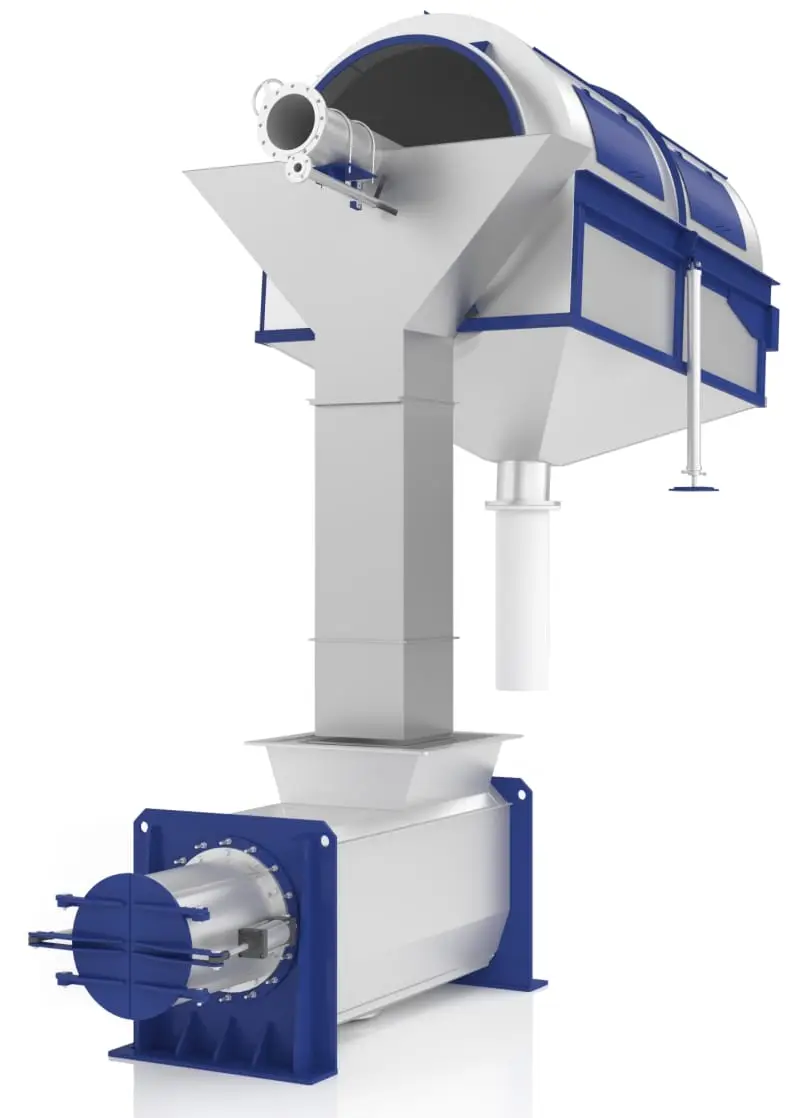
The trommel works alongside other reject handling equipment — the ragger removes wire and rope from the pulper, while the trommel handles lighter rejects from the screen. Together, they ensure maximum fiber recovery and clean reject disposal from the pulping system.
Trommel Screen Machine Capacity and Specifications
The trommel machine capacity range varies widely based on your mill’s production target. Parason manufactures trommel screen machines in the TSR and ITR series:
| Model | Type | Capacity (TPD) | Motor Power (kW) | Application |
|---|---|---|---|---|
| TSR-1 | Trommel Screen | 6 to10 | 3.7 | Small recycled mills |
| TSR-2 | Trommel Screen | 10 to15 | 5.5 | Medium recycled mills |
| TSR-3 | Trommel Screen | 20 to25 | 7.5 | Large recycled mills |
| ITR-02 | Inclined Trommel | 10 to15 | 5.5 | Space-constrained layouts |
| ITR-03 | Inclined Trommel | 20 to25 | 7.5 | High-capacity recycled mills |
For larger mill capacities (50 to 400 TPD), Parason offers the TSR series with larger drum dimensions, higher throughput capability, and SS-304 stainless steel construction. The product page for trommel screen has detailed specifications for each model.
When it comes to trommel machine price, the cost depends on the capacity, drum dimensions, material of construction, and whether you need the standard or inclined configuration. For a quotation specific to your mill requirements, contact our engineering team.
Whether you are setting up a new recycled paper mill or upgrading your existing reject handling system, the trommel screen machine is an investment that pays for itself through fiber recovery alone. With Parason’s TSR and ITR series, you get proven equipment backed by 2,000+ installations across 75+ countries. Explore our complete stock preparation equipment range, learn about our turnkey solutions, or read more about paper machine technology to plan your project end to end.